

March 30, 2026
Mortgages for living vs. investing: key differences
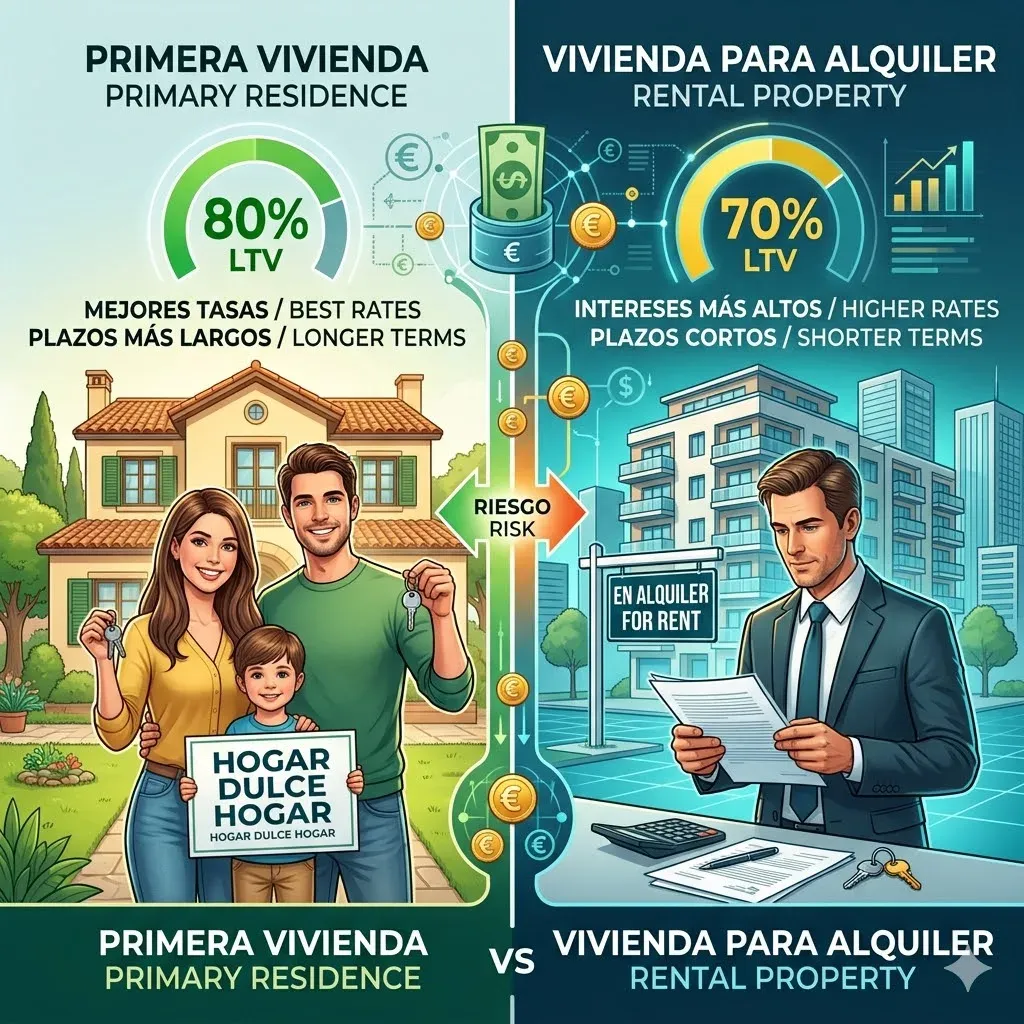
- Loan-to-Value (LTV) The most decisive factor is the LTV, which is how much the bank lends you relative to the property's value.
Primary Residence: Banks typically finance up to 80%, sometimes reaching 90% for specific profiles.
Rental Property: The risk is considered higher. Financing is usually limited to 60% or 70%, requiring more initial savings.
- Interest Rates Banks believe you are less likely to default on the roof over your head than on an investment.
Primary Residence: You access the best market rates (fixed or variable).
Rental Property: Rates are typically 0.5 to 1 percentage point higher as a risk premium.
- Repayment Terms Primary Residence: Standard terms are 30 years, sometimes up to 40.
Rental Property: Terms are shorter, generally limited to 20 or 25 years.
- Solvency Analysis Primary Residence: Debt should not exceed 30-35% of your net income.
Rental Property: The bank analyzes potential rental income, but usually only counts 80% of the rent to cover vacancy periods.